
Ecchi is the playful, suggestive side of anime and manga. Here is what the word means, where it came from, and how it compares with hentai, ero and fan service.
What Is Ecchi?
Oct 6, 2026

Ecchi (エッチ) is a Japanese slang word for playful, suggestive sexuality. In anime and manga fandom, ecchi describes works with sexual humor, revealing outfits and teasing situations, while keeping sex itself off screen. The word comes from the letter "H", the first letter of hentai, pronounced "etchi" in Japanese.
That is the short answer. The longer one is more interesting, because the word means something slightly different in Japan than it does in Western fandom, and it sits next to several terms people often mix up. This guide covers all of it.
Ecchi at a glance
- Japanese: エッチ (romanized as etchi in Hepburn, written ecchi in the West)
- Pronunciation: "EH-chee", with a short pause before "chi"
- Origin: the letter H, short for hentai
- Western meaning: suggestive but non-graphic sexual content in anime, manga and games
- Japanese meaning: "sexy" or "dirty" as an adjective, and "to have sex" in the phrase ecchi suru
- Closest related idea: fan service
What Does Ecchi Mean?
The meaning of ecchi depends on who is using it.
In Western anime fandom
Here, ecchi is a content label. It marks a series, manga or game as sexually suggestive but not pornographic. Ecchi works reference sex, play with innuendo and show revealing moments, but they never show sex on screen. The tone is usually comedic or flirtatious.
Fans use it to separate "spicy but mainstream" from adult-only content, which they call hentai.
In everyday Japanese
In Japan, ecchi is ordinary slang, not a genre label. It works in three ways:
- Adjective: something or someone is ecchi, meaning sexy, dirty or lewd in a teasing way.
- Verb: ecchi suru (エッチする) means "to have sex".
- Noun: a person with lewd behavior can be called ecchi.
The tone is lighter than hentai, which in Japanese implies perversion. If someone calls a friend "ecchi", it can read as flirting. Calling them "hentai" sounds more like an accusation.
Japanese media also rarely use ecchi as a formal category. For light, playful erotic content in manga, Japanese readers use oiroke manga (お色気漫画). For adult-only work, the usual terms are ero manga, seijin manga (adult manga) or 18-kin (18禁, restricted to 18+).
What Makes a Scene Ecchi?
Ecchi is a type of fan service focused on sexual themes. One suggestive moment does not make a series ecchi. The elements need to appear often, usually across most episodes or chapters.
The most common ecchi devices are:
- Innuendo and misunderstandings: double meanings in dialogue, or a situation that looks more suggestive than it is.
- Revealing or themed outfits: swimsuits, bunny suits, cosplay, lingerie and costume transformations.
- Wardrobe accidents: wet, torn or slipping clothing, often during fights or rain scenes.
- Setting-based fan service: hot springs (onsen), beach episodes and shower scenes.
- Comedic accidents: a character trips and lands in a compromising position, usually followed by a slap.
- Reaction gags: the exaggerated nosebleed, a visual shorthand for a character getting flustered.
- Censorship tricks: steam, light beams, props and camera angles that hide what the scene implies.
The common thread is suggestion. Ecchi shows enough to make the viewer think about sex, then cuts away or plays it for laughs.
Ecchi vs Hentai and Other Related Terms
Ecchi overlaps with several anime and manga terms. This table shows how they differ in meaning and in how adult they get.
| Term | What it means | Adult-only? |
|---|---|---|
| Ecchi | Suggestive, playful sexual content. Innuendo, revealing outfits, teasing situations. | No |
| Hentai | In the West, adult-only anime and manga that show sex directly. In Japanese, the word means "pervert" or "perverse". | Yes |
| Ero | Japanese for "erotic", from the Greek Eros. Stronger than ecchi, used in terms like ero manga. | Often |
| Fan service | Anything added to please fans. Can be sexual, but also a cameo, an action shot or a callback. | No |
| Harem | A story structure where one character is surrounded by several love interests. Frequently ecchi, but not always. | No |
| Oiroke | Japanese term for light, sexy appeal. The closest native equivalent to the Western use of ecchi. | No |
| 18-kin / H-anime | Labels for adult-only works in Japan. The "H" prefix marks adult-only content. | Yes |
| Ahegao | A specific exaggerated facial expression from adult art, not a genre. | Adult-coded |
A simple way to remember it: ecchi is the tease, hentai is the adult-only version, and fan service is the wider toolbox ecchi draws from. If you want to go deeper into adult anime vocabulary, our guide on what ahegao means and where the expression comes from covers another term that often gets confused with genre labels.
How the Word Ecchi Developed Over Time
Ecchi started as a shortcut for a scientific word and ended up as everyday slang. Here is how it happened.
- Meiji period (1868 to 1912): hentai enters Japanese as a technical term for "transformation" or "abnormal state" in science and psychology.
- 1910s: sexology adopts the phrase hentai seiyoku, meaning "abnormal sexual desire". A 1915 book on sexual deviance by Eiji Habuto and Jun'ichirō Sawada makes the term widely known.
- 1920s: publications on unusual desire multiply alongside the ero guro nansensu ("erotic grotesque nonsense") movement. One Japanese historian calls this period a "hentai boom".
- 1930s: censorship tightens and fewer books on the topic are published.
- 1950s: after World War II, people start shortening hentai to its first letter, H, pronounced "etchi". A 1952 report in the magazine Shukan Asahi records a woman using "etchi" to scold a stranger who touched her in a cinema.
- 1960s: young people begin using etchi to refer to sex in general, separating it from the heavier meaning of hentai.
- 1968: Go Nagai's Harenchi Gakuen begins in the first issue of Weekly Shōnen Jump. It is widely credited as the first ecchi manga, and its sexual humor caused a strong backlash from parents' groups.
- 1980s: etchi suru becomes a common way to say "to have sex".
- Later, in Western fandom: anime fans adopt "ecchi" as a genre label for suggestive content, and keep "hentai" for adult-only works.
So the Western split between ecchi and hentai is a fandom invention. In proper Japanese, ecchi is simply an abbreviation of hentai, and there is no formal "softcore vs hardcore" divide between the two words.
What Are Ecchi Sex Dolls?
Every sex doll is an adult product, so "ecchi" here does not describe how adult the product is. It describes a design language. An ecchi-style doll takes the visual tools of ecchi anime and builds them into a physical figure.
In practice, that means:
- Outfits and costumes: the doll arrives dressed, often in a themed look such as a bunny suit, bikini or character costume. Dressing and undressing is part of the appeal, just as in ecchi scenes.
- Anime proportions: stylized faces, large eyes and exaggerated curves taken from 2D character art.
- Character identity: a clear concept, such as a succubus, a gamer or a bunny girl, that makes the figure read as a character.
- Display value: a finish and sculpt good enough to pose on a shelf, not only store in a drawer.
At Mochi XP, ecchi styling applies to adult character designs only.
Material matters for this style. Ecchi designs depend on sharp facial sculpting, clean body lines and costume detail. Silicone holds fine sculpt detail better over time, which is why all five examples below use silicone bodies. Our TPE vs silicone materials guide explains the practical differences if you are deciding between the two.
Best Brands for Ecchi-Style Dolls
Two brands in the Mochi XP lineup stand out for ecchi design. Mochi XP is an official distributor of both.
BCDOLLS: anime clarity and dressed presentation
BCDOLLS anime mini dolls focus on high-definition anime faces, sculpted curves and polished silicone finishes. Several models ship with outfits and accessories included, which fits the costume-first nature of ecchi. The joints are built to hold a pose, so a dressed figure can stay in position for display.
Best for: fans who want a clean anime look and a figure that works as a display piece.
MRLSEXDOLL: bold fantasy characters
MRLSEXDOLL hentai figures and fantasy dolls push character design further, with exaggerated fantasy forms, expressive sculpting and strong surface detail. MRL is also the workshop behind the official Meru the Succubus products, a character built almost entirely on ecchi visual language.
Best for: fans who like fantasy concepts and characters with strong personality.
If you want to browse ecchi and hentai-inspired designs across several brands in one place, the hentai mini sex dolls collection groups them together.
5 Examples of Ecchi Sex Dolls
Each of these shows a different side of ecchi design. Specs come from each product page.
| Model | Brand | Height | Material | Ecchi element |
|---|---|---|---|---|
| Dorothy | BCDOLLS | 63 cm | Silicone | Full outfit and accessories |
| Mizuki | Climax Doll | 59 cm | Silicone body, vinyl head | Curvy silhouette, poseable skeleton |
| Bunny Girl | Loribear | 70 cm | Silicone | Classic bunny costume |
| Diva | BCDOLLS | 67.5 cm body | Silicone | Gamer-inspired, athletic build |
| Ella | MRLSEXDOLL | 66 cm | Silicone | Busty proportions, blonde anime look |
1. Dorothy: the dressed display piece
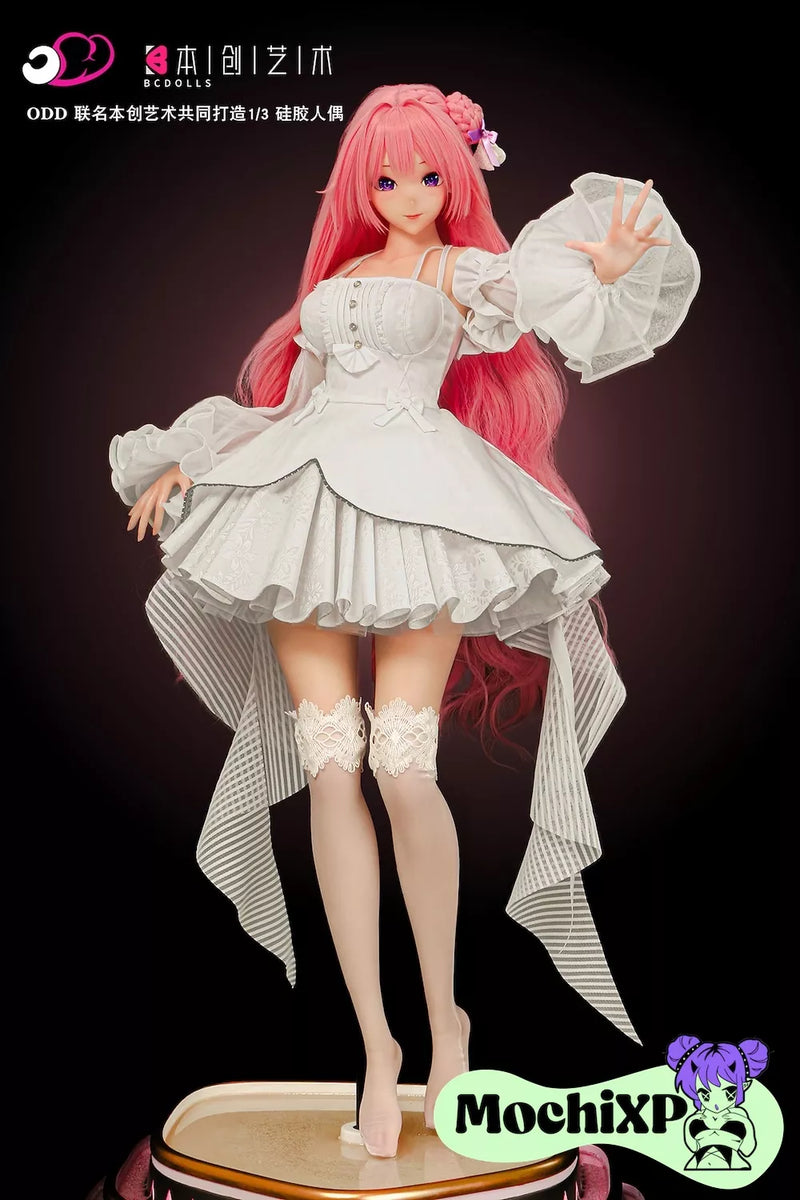
Dorothy, the 63 cm pink-haired silicone mini doll, is the clearest example of ecchi as costume play. She ships with a complete outfit and accessories, so the look starts fully dressed. The BCDOLLS silicone finish and poseable joints make her a strong shelf piece.
2. Mizuki: curves in a compact format
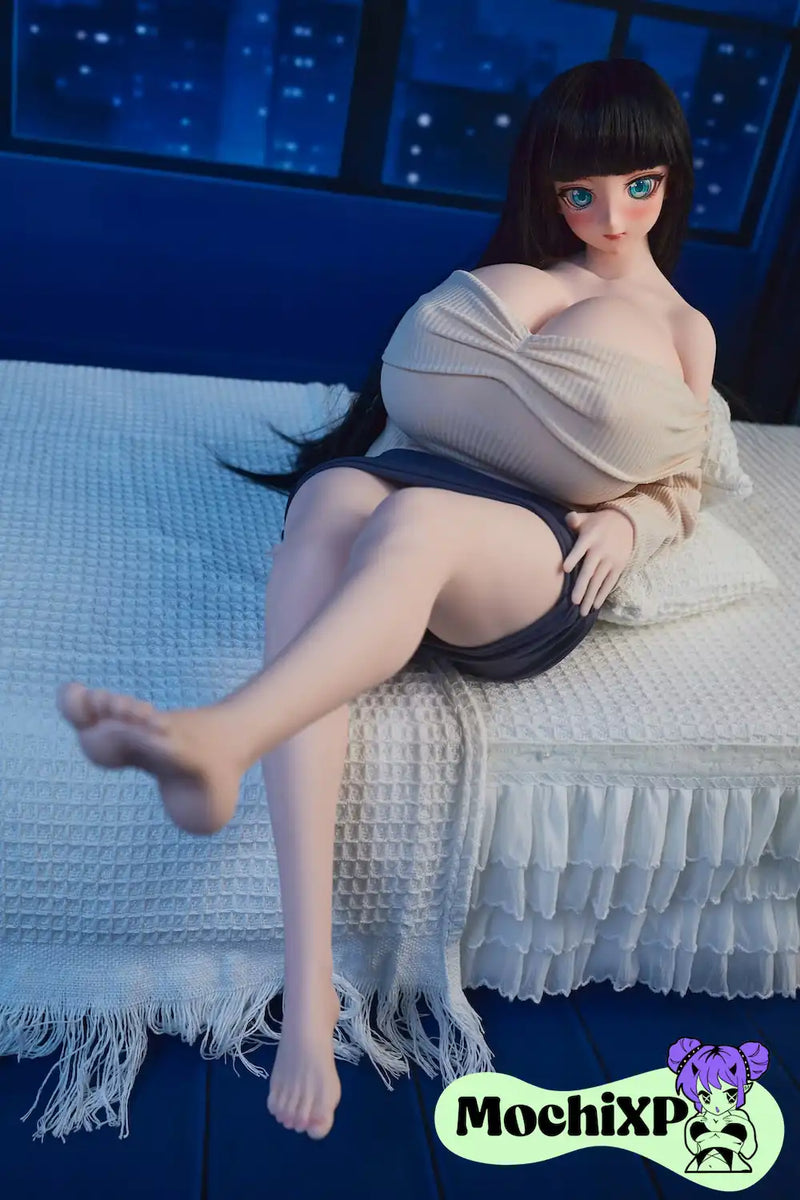
Mizuki, the 59 cm curvy anime mini doll, takes the exaggerated proportions of ecchi art into the smallest format on this list. She has a BJD-inspired look, black bob hair, blue eyes and a metal skeleton that holds poses.
3. Bunny Girl: the classic ecchi costume
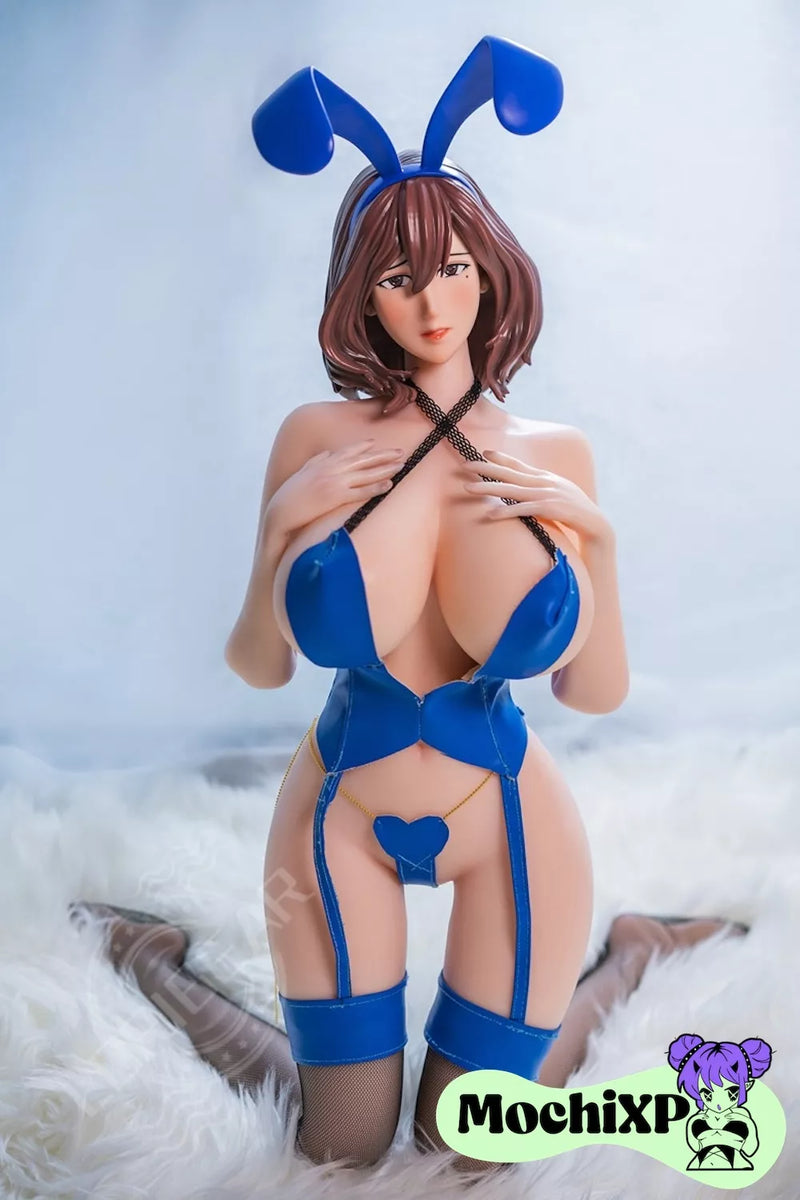
The bunny suit is one of the most recognizable outfits in ecchi anime. This 70 cm Bunny Girl silicone mini doll builds the whole design around it, with the outfit and accessories included in the package.
4. Diva: gamer energy, athletic build
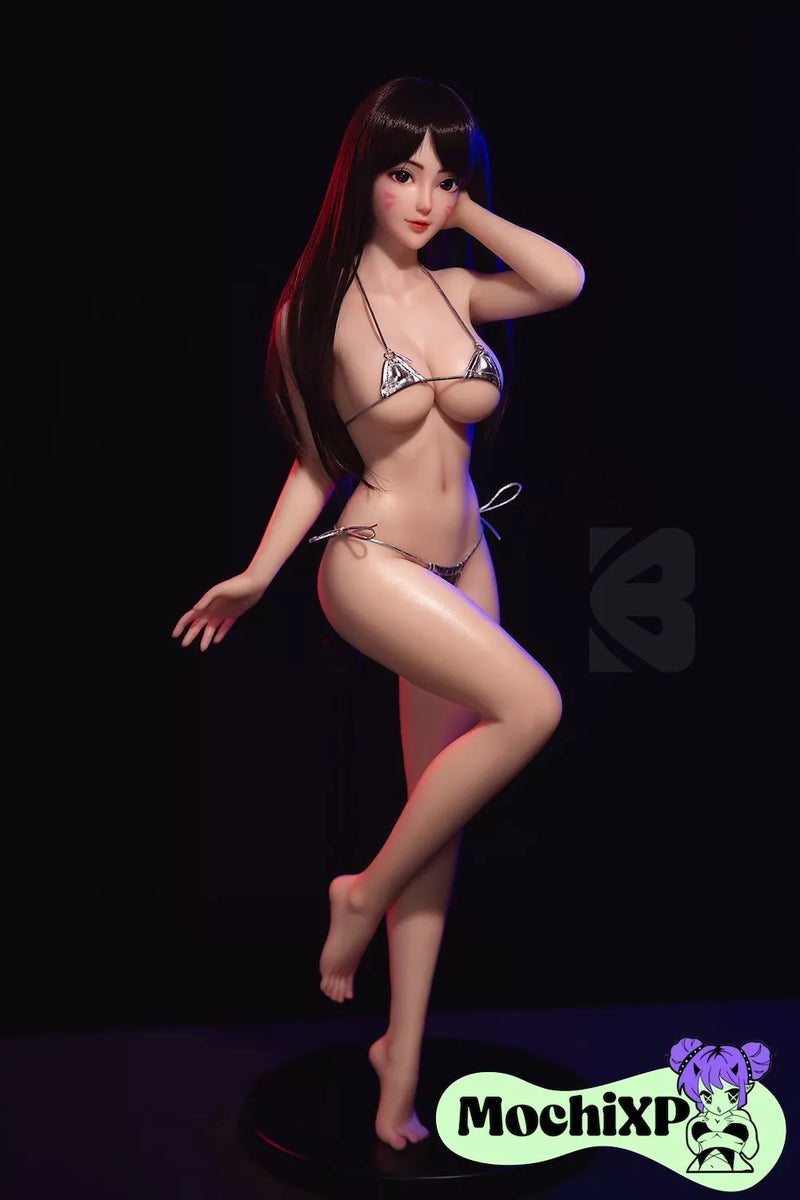
Diva, the athletic gamer-inspired anime doll, shows how ecchi crosses over from anime into game fandom. The sculpt is clean and expressive, and the 67.5 cm silicone body leans athletic.
5. Ella: bold proportions, blonde anime look
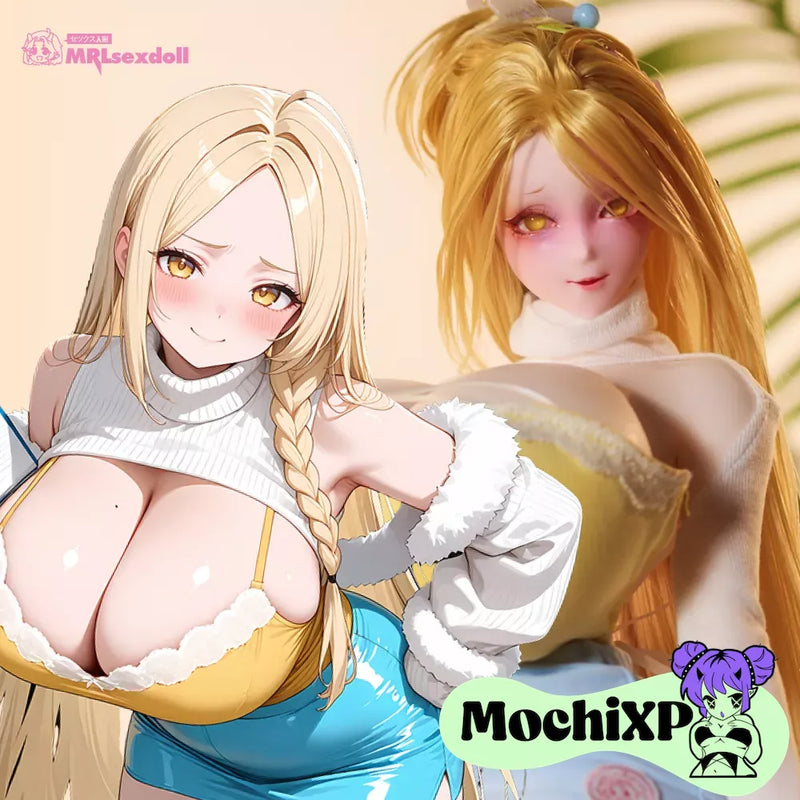
Ella, the busty blonde mini anime doll by MRLSEXDOLL, represents the exaggerated-curves side of ecchi design. She stands 66 cm tall in silicone, with a blonde anime face and a full, soft build.
Best Ecchi Character: Meru the Succubus
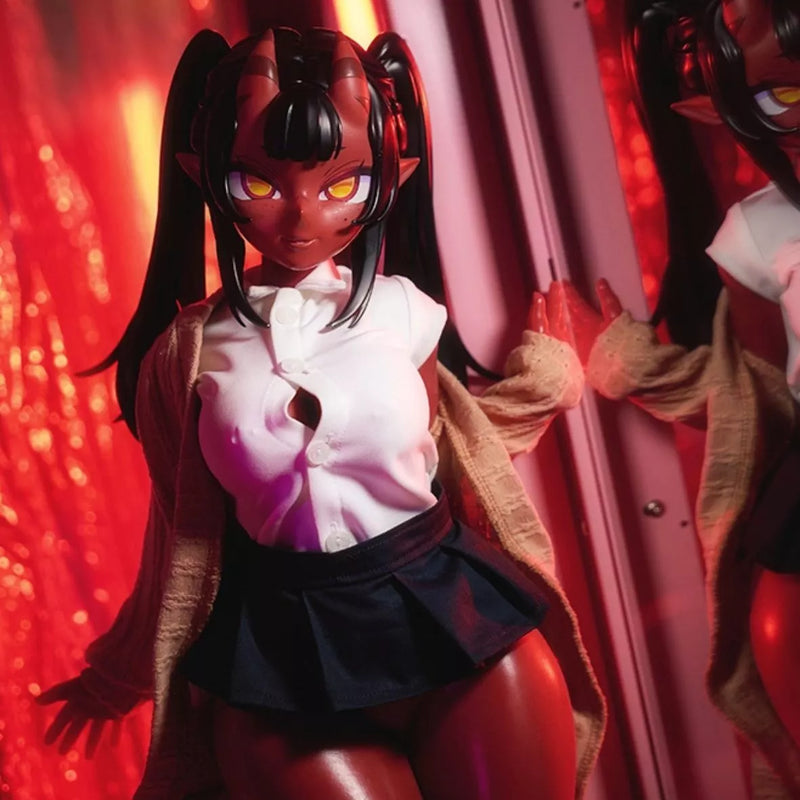
If one character captures ecchi design, it is Meru. A succubus is a folklore demon associated with seduction, so the concept is suggestive by nature. The design does the rest: red skin, horns, a tail, yellow eyes and long twin-tail hair. Every element signals playful temptation through styling alone, which is exactly how ecchi works.
Meru is also clearly a fantasy being. Horns, a tail and red skin keep the design in anime territory, far from any real person.
The Meru the Succubus sex doll collection offers the character in three silicone formats, all made by MRLSEXDOLL:
- Meru Onahole: the most compact and easiest to store.
- Meru Oral Toy Masturbator: a fuller sculpt with more character detail.
- Meru 3.0 Mini Sex Doll (65 cm): the complete, dressed full-body version.
Frequently Asked Questions
What is the difference between ecchi and hentai?
Ecchi is suggestive and keeps sex off screen. Hentai, as the word is used in the West, means adult-only content that shows sex directly. In Japanese, ecchi comes from the first letter of hentai, and hentai itself means "perverse".
What is the difference between ecchi and harem?
Harem describes a story structure: one character surrounded by several love interests. Ecchi describes the level of sexual content. Many harem series include ecchi scenes, but a harem story can be completely clean, and an ecchi series does not need a harem.
What is anime for adults called?
In the West, adult-only anime is called hentai. In Japan, common labels are 18-kin (restricted to 18+), seijin-muke (for adults) and the "H" prefix, as in H-anime. Ecchi anime is not the same thing, since it is suggestive but not graphic.
Is ecchi appropriate for everyone?
Ecchi contains sexual humor, innuendo and revealing scenes, so it is aimed at older audiences. Suitability depends on the specific series and its official rating. TV broadcasts in Japan often censor ecchi scenes with steam or light effects, while home releases may show more.
How do you pronounce ecchi?
Say "EH-chee". The double "c" marks a short pause before the "chi" sound, the same way the Japanese letter H is pronounced.
Level Up Your Ecchi Knowledge
Now you know the word, where it came from and how to spot the style. When you are ready to bring ecchi design off the screen, start with a dressed, character-led silicone figure and a brand that knows anime faces. Every Mochi XP order ships in plain, unbranded packaging with full tracking.
Bonus XP: create an account + join the newsletter to earn 200 XP, enough for $20 off your first ecchi pick.
